
At OlyFed, we believe in offering our customers and community members the financial tools and resources needed to thrive. That includes free checking accounts but also guidance on how to find the right fit for your banking needs.

Start by Comparing Your Local Options
Not all financial institutions work the same way. Those differences might matter more than people realize when it comes to checking accounts. Don’t forget to consider local options, not just national chains.
- Mutual banks: These community-focused banks are accountable to their customers, not outside investors and shareholders, so rates are typically competitive, and fees are minimal. They focus on long-term, meaningful customer relationships, delivering high-quality products and support that serve both you and the community. Even better, your deposits stay local with a mutual bank, living where you live, helping provide loans for first-time homebuyers and small businesses.
- Local and regional banks: Local banks often provide more personalized services than national chains. Staff know the community and can help you navigate account decisions face-to-face.
- Credit unions: As member-owned cooperatives, nonprofit credit unions often offer lower fees and competitive interest rates. Typically, you must meet membership eligibility requirements based on where you live or work or by belonging to certain organizations, although these rules have relaxed over the years and now just about anyone can join a credit union. One important footnote is that credit unions don’t pay federal income, and state business and occupation taxes like other financial institutions, which means community infrastructures, such as roads, schools, parks, and so on, are not directly supported through their operations.
A mutual bank can be ideal for many customers. You get the accessibility of a full-service bank but with a philosophy of service closer to that of a credit union.
When comparing options, search “free checking account near me” and make a short list of institutions with convenient branch locations. Then dig deeper into what they offer before deciding.

What Does a “Free” Checking Account Actually Mean?
The word “free” gets used loosely in bank marketing, so it pays to read the fine print. What does a truly free checking account actually offer?
- No monthly maintenance fee, or at least an easily achievable way to waive it. Some financial institutions require a minimum balance or a certain number of transactions to skip the fee, which isn’t really free for everyone.
- No minimum balance requirement to open or keep the account open.
- No fees for standard debit card use at the bank’s own ATMs.
Watch out for accounts that are advertised as free but come with strings attached, such as charging you a fee if your balance drops below a certain threshold. In other cases, there might be a monthly charge that’s waived only with direct deposit. Or you could risk penalization for overdrafts, like the 12 percent of US adults who paid fees in 2025.
Don’t be afraid to ask directly, “What could make me pay a fee on this account?”
Look Beyond “Free” to What Actually Fits Your Needs
A checking account with no fees is a great starting point. However, the best account for you should also fit how you actually bank day-to-day. As you compare financial institutions, think about:
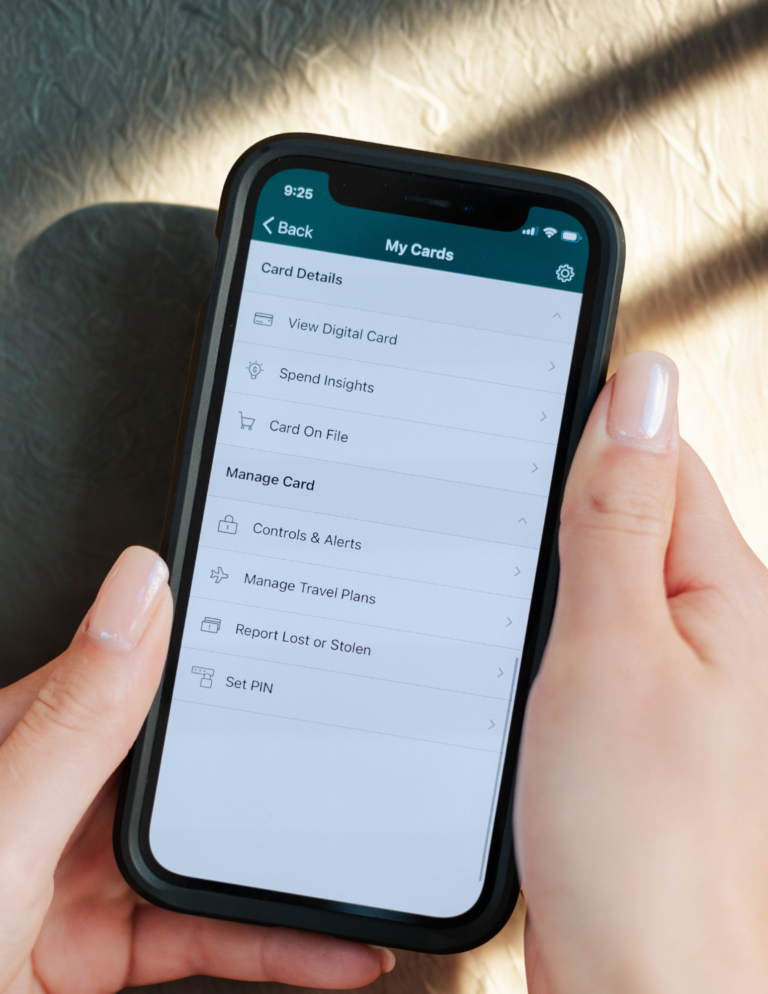
- Branch and ATM access: Even if you do most of your banking on your phone, mobile device or computer, it helps to know there’s a branch or a large network of surcharge-free ATMs nearby. There might be times when you need cash or in-person help.
- Online and mobile banking: According to the FDIC, 3 percent of US households primarily use mobile banking to access their accounts. Look for a mobile app that lets you deposit checks remotely, transfer funds, pay bills, and monitor your account activity in real time.
- Direct deposit: Setting up direct deposit for your paycheck is one of the simplest ways to make sure your money is available the moment it’s paid, without a trip to the bank.
- Debit card features: Ask if they offer contactless payment options and easy card-lock controls if your card is ever lost or stolen.
Make a list of your priorities so it will be easier to compare financial institutions side by side.
Two Features Worth Asking About
Beyond the basics, some Washington financial institutions offer extras that add real value without adding cost. Two features that are worth asking about:
- Round-up savings: This feature automatically rounds each debit card purchase up to the nearest dollar, moving the difference into your savings account. It’s a nearly invisible way to build savings over time. Because you’re not setting aside money, you won’t have to adjust your budget at all. Although it may seem small, savings can add up.
- Give-back programs: Community-centered give-back programs donate to local nonprofits or schools every time you use your debit card, at no cost to you. OlyFed’s Two Cent Campaign, for example, supports a wide range of local nonprofit organizations and education partners, rotating every month. Strong schools and communities improve the quality of life for everyone in the area. Give-back programs allow your everyday spending to support the community you live in, quietly doing good in the background.
How to Apply for a Free Checking Account
Once you’ve chosen a financial institution, opening an account is usually a quick process, especially if you come prepared.
Gather Your Identification and Documents
Most Washington financial institutions will ask for:
- A government-issued photo ID—such as a driver’s license, state ID card, or passport
- Your Social Security number or Individual Taxpayer Identification Number
- Proof of address—for example, a utility bill or lease agreement
- An opening deposit—many free checking accounts allow you to open with as little as $1
Application Process
Whether you walk into a branch or apply online, the steps are similar:
- Choose your account type and confirm there’s no monthly fee or minimum balance requirement.
- Provide your personal information and identification.
- Fund the account with your opening deposit.
- Set up online and mobile banking access.
- Order your debit card if one isn’t issued immediately.
- Work with your personal banker to switch your deposits and automatic payments to your new financial institution. Many institutions offer an EasySwitch option that uses new technology and tools that automate the process.
Finding the Right Fit
Searching “free checking account near me” is a great place to start. But don’t just choose the first option that comes up. Do some research. Compare fees and the services that matter to you. Taking the time to consider your options means you’ll be able to find an account that actually works for how you live and bank.
To learn more about OlyFed’s four free checking account options, explore our website, stop in, or give us a call.